EDITORS NOTE: This story is part of a Devil’s Advocate series focusing on the current state of education, internationally, nationally, and here at LHS. Students researched the current trends in education and worked together to determine if national trends were present in Leominster, and if so, what that may mean for education. This is part of their research.
Artificial intelligence, more commonly known as AI, has quickly become part of everyday student life. Students admit to using it for answering questions for homework, writing essays in school, and even to write responses to opinion questions. It has become second nature.
AI tools are drastically changing the way students adapt, learn and complete assignments. While some people believe AI can help students work more efficiently, many teachers are noticing a visible decline in critical thinking skills, the ability to work independently, and the failure to adapt to new learning situations.
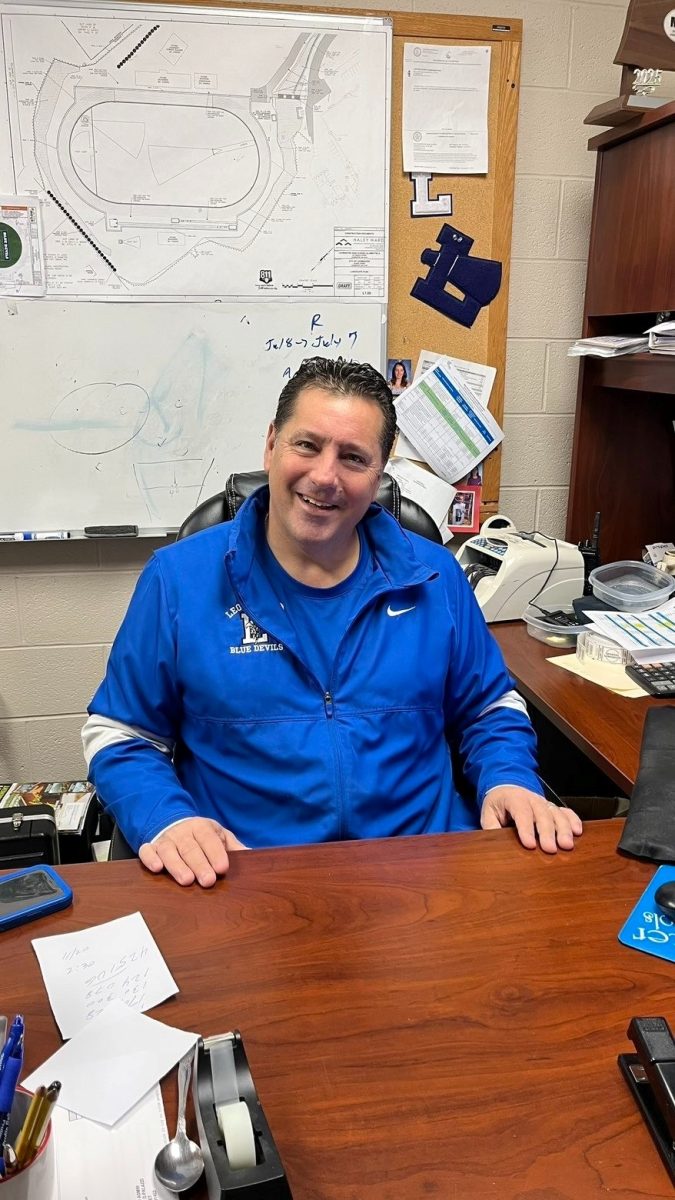
One teacher who has had his students work with technology for quite some time, LHS TV/Media teacher, Timothy Smith said “I have had computers in my classes a lot longer than other people and AI is an interesting issue even in my area. And ,you know, teaching about filmmaking and things like that, I have had kids try to use it to write scripts for them. It’s not good at that.”
Smith said he has also seen it used in video editing, “Which I’m torn about. There’s good parts of it. There’s things that AI can do that are very difficult to do by the human eye. “
Smith said it may not be as simple as eliminating it, but instead a refocus on training to use it. “In education in general, I think AI is something we’re going to have to deal with, and figure out how to handle because a lot of how we teach the things that we are asking students to know or do are very easy for AI to replicate. So that’s a problem we have to face for sure.”
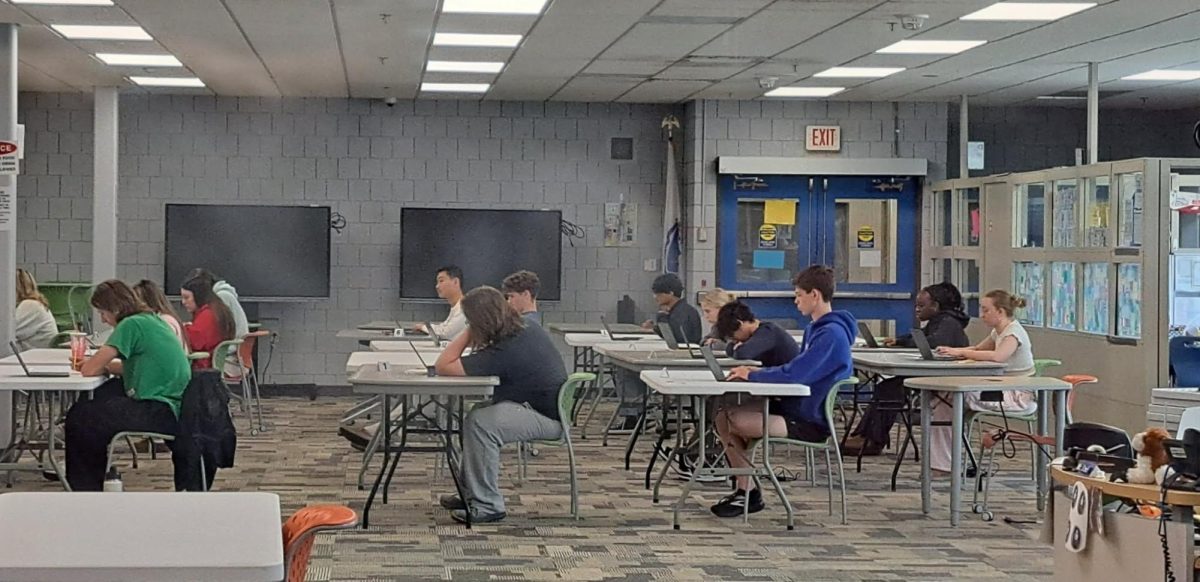
Many students said that using AI has become part of their everyday school routine.
National trends confirm they are not alone. According to a Pew Research Center report, about 1 in 5 U.S. teens who have heard of ChatGPT have used it for schoolwork, highlighting how quickly AI tools are becoming part of students’ academic routines.
LHS Junior Julibel Lorenzo shared that she uses AI frequently to help with her assignments. She explained that she first started using it during her freshman year, and since then, it has become a regular tool for completing her work.
LHS Senior Daisy Pindea said that she uses AI daily. ”It actually motivates me to do school work, because I can get it done quicker.” She added that very frequently, she trusts AI-generated answers more than her intuition.
According to several educators that we interviewed, they too have seen how much students have become dependent on technology. Teachers worry students seem to be less willing to think for themselves. Teachers say AI is not only affecting critical thinking, but also classroom behavior.
LHS Health teacher Timothy Sheridan explained,”I think AI has had a truly negative impact on the education of students. It has REALLY damaged students’ critical thinking skills, as well as their resilience to boredom or productive struggle.
Sheridan added it is the temptation that is the problem. “I will say the truly committed students have been able to use AI tools in a more collaborative manner, which can have benefits, but the majority of what I see are just using it to get their work done as fast as possible so they can engage in things they enjoy. I am so, so, so, beyond curious to see the studies that will inevitably come out about AI and its impact on this current generation of students. I feel like there needs to be more guidance on how we educate kids on these AI tools, and that in that same vein we just were NOT ready in public schools to manage the deep impact AI prevalence has had.”
As AI continues to be used more in classrooms, many industry experts are beginning to wonder how it is affecting the way students learn and think. A survey conducted by the College Board found, “The percentage of high school students who report using GenAI tools for schoolwork is growing, increasing from 79% to 84% between January and May 2025.”
LHS Science teacher Sherri Fairbanks explained that students often. “Automatically just Google and let AI do all the work,” instead of taking time to solve problems independently.
She believes this has “diminished critical thinking” because students no longer try to work through papers by themselves and challenge their own thoughts. Rather than learning from mistakes or developing reasoning skills, many students search for quick answers and move on.
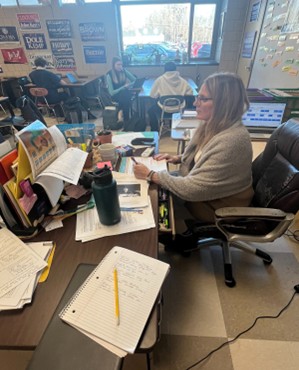
LHS History teacher Larissa Murphy shared a similar concern, stating that AI has “made it so that students aren’t practicing those skills as much as they need to practice them.”
She explained that students are struggling to develop their own opinions and ideas because they rely too much on heavily AI-generated responses. According to her, it becomes obvious when students use AI because she receives “the same exact answers from every student to a question that is an opinion.”
She believes this prevents students from developing creativity and original thinking skills that are essential in education.
Sheridan compared critical thinking to a muscle that becomes weaker without practice. According to him, when AI does “all the analysis and draws all the conclusions” for students, they lose the “mental reps” that come from struggling through difficult questions. Over time, he said, this weakens students’ reasoning abilities and may even lead to poor or unsafe decision-making in the future.
Teachers also believe that AI has unfavorably affected a student’s academic performance.
Fairbanks explained that AI has made assignments “too easy” causing students to copy answers without actually learning the material. She said students often “instantly forget the information because they never truly understood it in the first place.”
Murphy added that students caught cheating in her class can receive zeroes, which harms their grades. However, she also believes the larger issue in that AI is stopping the students from being able to create their own ideas. Instead of students taking time on assignments and thinking deeply, many students are writing down AI generated answers to complete the work quickly.
The rise of AI has also forced teachers to change their teaching styles.
Fairbanks explained that she moved away from allowing her students to use technology as a resource and instead allows them to use a “book cart”. She states that when students have access to the internet, they are “too tempted to Google things,” that take away from their own learning.
Students admitted this to be true.
LHS Senior Yeny Romero Ferrufino said she often uses AI to find information for her assignments, but the results are not always clear or accurate. Because of this, she sometimes has to rely on her own methods to fully understand the material.
LHS Senior Marcela Cisneros, also shared mixed feelings. She said AI helps her in daily life by making it easier to find answers, but she does not fully trust it because it can sometimes be inaccurate or unreliable.
Murphy said this use of AI has led to a dramatic shift in her classroom, where she has gone “completely back to paper and pencil.” She has explained that she no longer gives exams online or relies on computers as a teaching resource because AI makes it too easy for students to cheat and avoid authentically doing their work.
Despite some of these concerns, some teachers believe that AI can still have positive uses if used correctly and responsibly.
Murphy explained that AI should be used as a “finishing tool” rather than a starting point. And Sheridan noted that some highly motivated students use AI “in a more supportive and collaborative capacity.” These students use AI to strengthen the authentic work that is already there instead of replacing it completely.
Although AI can be a useful educational resource, many teachers worry students are becoming too dependent on it. Instead of strengthening reasoning and problem solving skills, AI they say, often encourages shortcuts and copied work.
Teachers like Fairbanks, Murphy, and Sheridan believe that students are losing valuable learning opportunities to think independently, develop original ideas, and learn through struggle.
Smith said we have one advantage that other schools across the nation do not.
“I feel good about it at least here. I think Massachusetts tends to be progressive in its education, willing to make changes as needed, but we need to figure some things out for sure. A lot of how we’ve taught for 100-plus years is memorize these things. And with technology today, you don’t—what are we getting from you? You can look it up. It takes half a second. You can talk to your phone and get the right answer. So I think we’re going to need to shift more into research skills, into the act of learning and the act of discovery more…”
As AI continues to grow in schools, educators believe that teachers and students must learn to balance technology to ensure students are displaying genuine effort and critical thinking before these skills are permanently weakened.