The LHS media center fosters creativity, technology skills, and student engagement while also highlighting the need for improved resources and access.
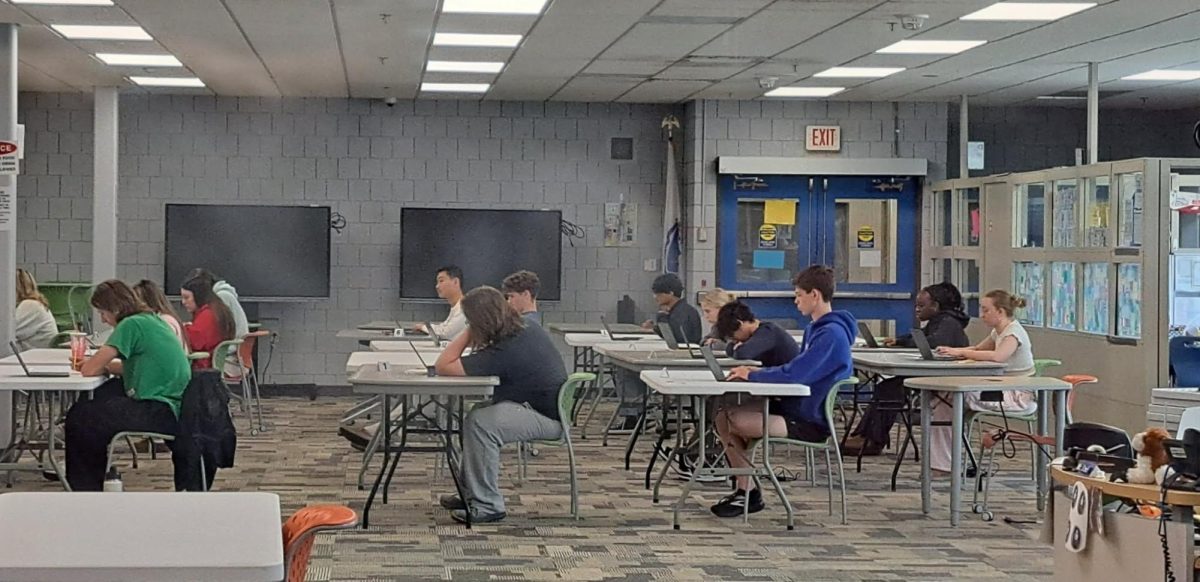
At Leominster High School, the media center has become much more than a quiet place for people; it is a place to highlight growing technologies, creativity, and many opportunities for students. With tools like robots, 3D printers, and virtual learning options, the space is helping students engage in new and meaningful ways while preparing for the future.
One of the most unique features of the media center is its use of interactive technology, especially robots. According to LHS Media Specialist James Freel, these tools have had a noticeable impact on student involvement.
“It was good because we could get the Lifeskills kids to come up and participate,” Freel said. “Everyone seems to really like the robots and it goes well with hands-on coding.” He also noted that school-wide events like Hour of Code encourage students to explore programming, with many people coming in specifically to use the robots.
Students agree that the interactive elements make the media center stand out. “I love interacting with the media center robots because we get to drive them around the school and teachers come up to us and talk to us,” explained LHS Senior Samuel Ward. “It’s very interactive and a great experience.”
LHS Senior Emily Nguyen added that the robots help students connect with one another, saying, “It’s really fun and it’s good because it makes me interact with other people who find interest in them.”
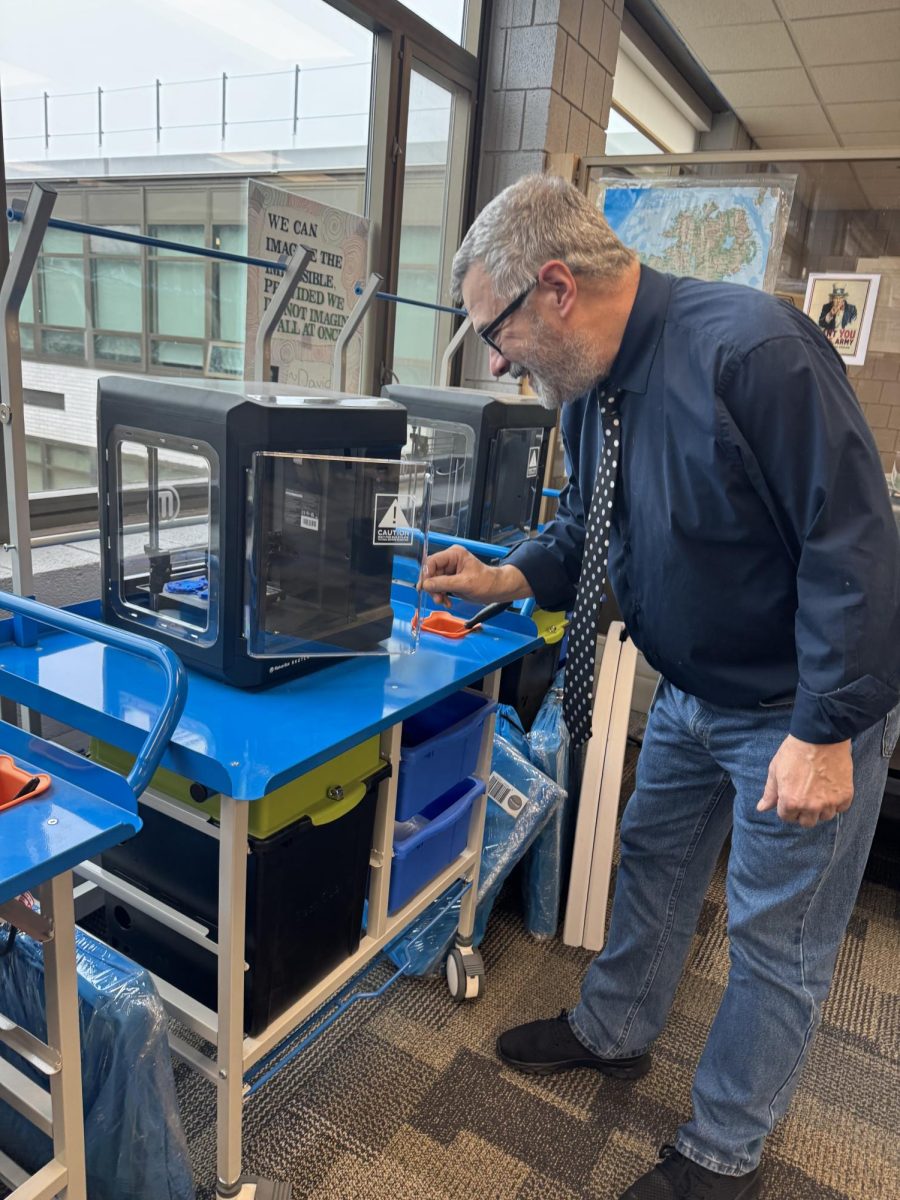
Beyond robots, the media center offers a wide range of technology designed to support creativity and real-world skills. Mr. Freel highlighted tools such as 3D printers and sublimation equipment, which allows students to design and create products like mugs, earrings, and keychains.
“It’s a great skill to know,” he said, noting that students can even use these skills for entrepreneurial opportunities on platforms like Ebay or Etsy.
This space also supports academic growth through new learning opportunities. Virtual High School (VHS) classes allow students to take courses not offered here at LHS. Mr. Freel described these classes as “very rigorous and very academic,” often attracting students who are highly motivated in their education to take them.
For example, Samuel Ward thinks that flexibility is a major benefit. He delineated that, “My favorite part of the media center is probably the ability to take classes that I would not be taking if it weren’t for the flexibility in my schedule.”
While the media center offers many advantages, both students and staff acknowledge that there is room for improvement. Chromebooks, a key part of daily learning, have limitations. Mr. Freel explained that while they are useful, they are “not being used to their full potential,” especially when it comes to integrating artificial intelligence.
Students also pointed out technological issues. Samuel Ward voiced that, “The school Chromebooks are not the best. Also, the internet barely works – they can update that.”
Emily Nguyen added that restrictions on certain websites can be frustrating. She explained that, “I think it can be improved by not blocking so many things that are needed like Quizlet and such.”
Despite these challenges, Mr. Freel believes that embracing new technologies, especially artificial intelligence, is essential for education and schools moving forward.
“There are really safe, ethical, great ways to use it and it really needs to be used. We can’t be ten years behind our artificial intelligence as public education,” he remarked. “It’s probably the greatest technological advancement humanity has made.”
Overall, the LHS media center plays a vital role in the school community. Whether students are collaborating over robots, creating products, or pursuing independent studies for themself, this space in the school offers opportunities that go far beyond traditional learning.